An engineering look at voice-first AI matchmaking, identity verification, preference ranking, and real-time communication.
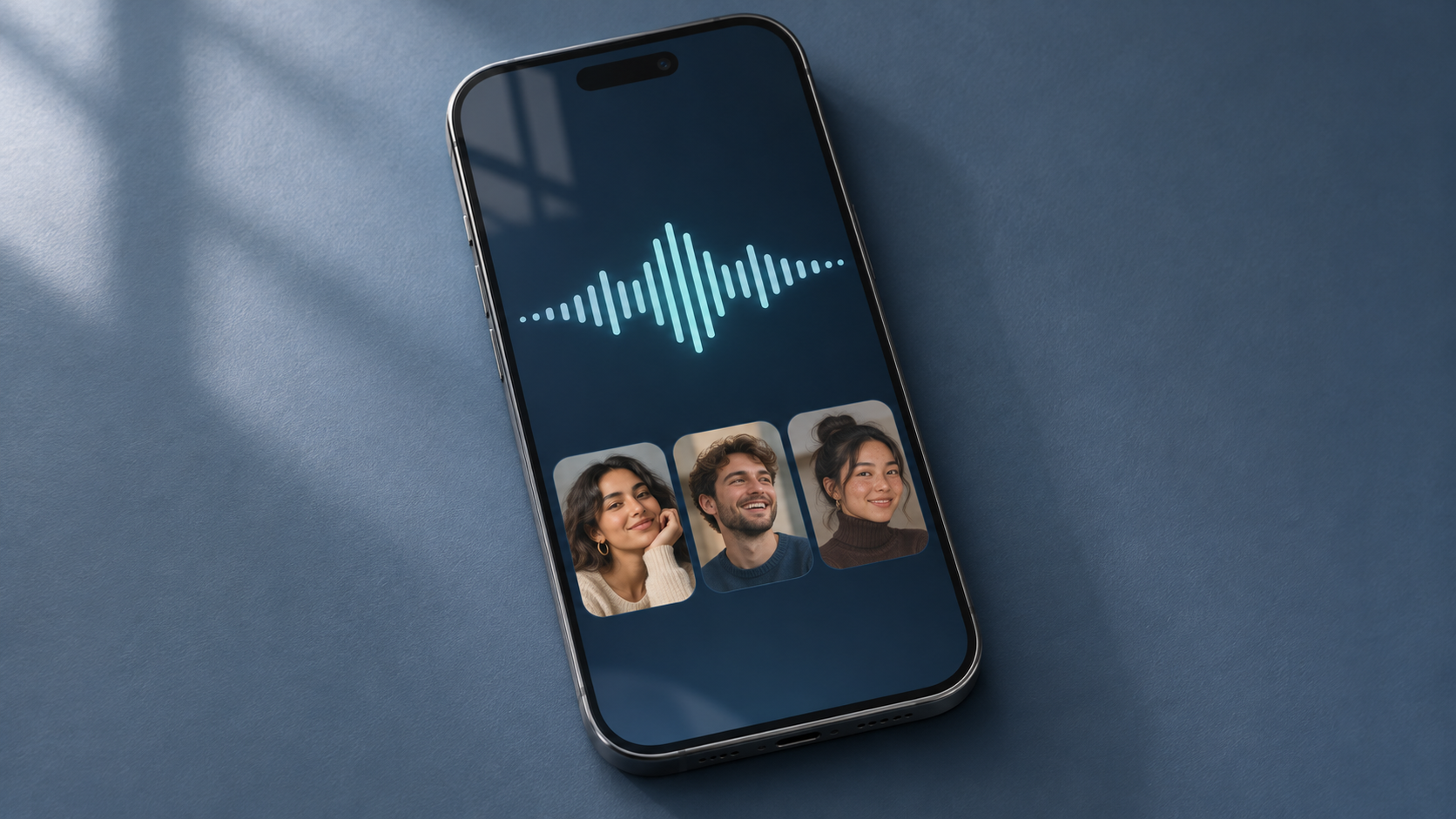
Dating apps can collect plenty of swipe data without learning why someone passed on a profile. The decision might reflect distance, timing, or a preference the app has never asked about. The voice-first dating app oku takes a different approach. It asks users to talk about their values and relationship goals, then turns those answers into a ranked shortlist.
That shifts the engineering challenge. The system has to translate an open-ended conversation into a profile that can be updated and used for ranking. Four other projects show how teams tackle adjacent problems, from deciding when to verify a user to coordinating what happens after a match.
1. Turning voice interviews into ranked matches
GeekyAnts built oku’s mobile app and matchmaking system around two AI agents. The Match Recommendation Agent conducts a voice interview and builds a profile from the user’s answers. The Personal AI Companion uses later conversations to update that profile and refresh recommendations. The app presents 12 ranked matches, encourages users to focus on one connection at a time, and includes identity verification and in-app messaging.
The published stack includes Expo, TypeScript, LiveKit, and PostgreSQL with pgvector. A useful design question for a similar system is how to handle conflicting signals. If someone explicitly says their relationship goal has changed, the profile update should take precedence over an older inference. Keeping explicit preferences distinct from inferred traits makes that behavior easier to test and explain. The oku video case study walks through how the interview, companion, and ranked shortlist fit together.
2. Bringing identity verification into the chat
STRV built the iOS and Android apps for Zoe, a dating and social networking app for lesbian, bisexual, and queer women. Alongside standard profile verification and AI-assisted moderation, Zoe lets matched users request verification within the chat.
Placing verification inside a conversation introduces a workflow with two participants. A similar implementation needs clear states for a pending, completed, or declined request. It also needs to decide what each participant can see. Those choices shape whether the feature helps someone make an informed decision before sharing contact details or arranging a meeting.
3. Treating a date as a workflow
QtaSO worked on the mobile and backend systems for Flirt, where users browse date ideas with an activity, time, and place. Users rank their preferences, receive a confirmation, and chat to finalize plans. The app also supports post-date feedback and reporting.
Once a match includes a plan, notifications and chat access depend on the status of that plan. A backend can model proposed, confirmed, and canceled dates as explicit states. That makes it easier to test cases such as a scheduled reminder reaching the delivery queue after a date has already been canceled.
4. Learning from browsing behavior
Relia Software developed the mobile apps and matching system for Let’s Date, which used location, mutual likes, and browsing feedback to inform recommendations.
Behavioral data lets a ranking system adapt without asking users to describe every preference. The challenge is determining how much weight to give each interaction. A pass provides less context than a stated deal-breaker. Treating both signals as equally reliable can narrow the pool for reasons the user never intended.
5. Adding voice and video after a match
Sendbird supplied the communications technology that helped Hinge add one-to-one voice and video calls. The feature gave matches a way to talk inside the app before deciding whether to exchange phone numbers or meet.
The timing changes what engineers should measure. A voice interview can be evaluated by how often users complete it and whether its recommendations lead to conversations. An in-app calling feature calls for different checks, such as how often both participants connect successfully and where calls drop.
How to test whether voice-first onboarding helps
A team testing voice onboarding could compare two cohorts: one offered an interview and one given a shorter profile flow. It could then track onboarding completion and the share of new users who exchange messages with a recommended match within seven days. Measuring that second outcome across everyone assigned to each flow captures the effect of interview drop-off as well as what happens after matching.
The oku case study describes how the product works. Whether voice onboarding leads to more two-way conversations is a separate question that an experiment like this could help answer.
Comments
Join the discussionNo comments yet. Be the first to comment.